Operators and evaluation order
EXS separates recognition order from evaluation order.
OperatorList registers operator implementations by type. Its append order
is the order in which the solver checks symbols while tokenizing an
expression. Register overlapping symbols in a suitable order, such as
!= before !. StepList specifies the passes that evaluate the
recognized operators: earlier steps run first and therefore determine
precedence. A step names an operation category and the operator types to run
in that pass.
Default operations
The default Solver<Atom> uses these twelve StepList passes. Each card
shows the operation type and its registered symbols or function names.
Operators in one pass share the same precedence; the numbers show pass order,
not the order in which symbols are recognized during tokenization.
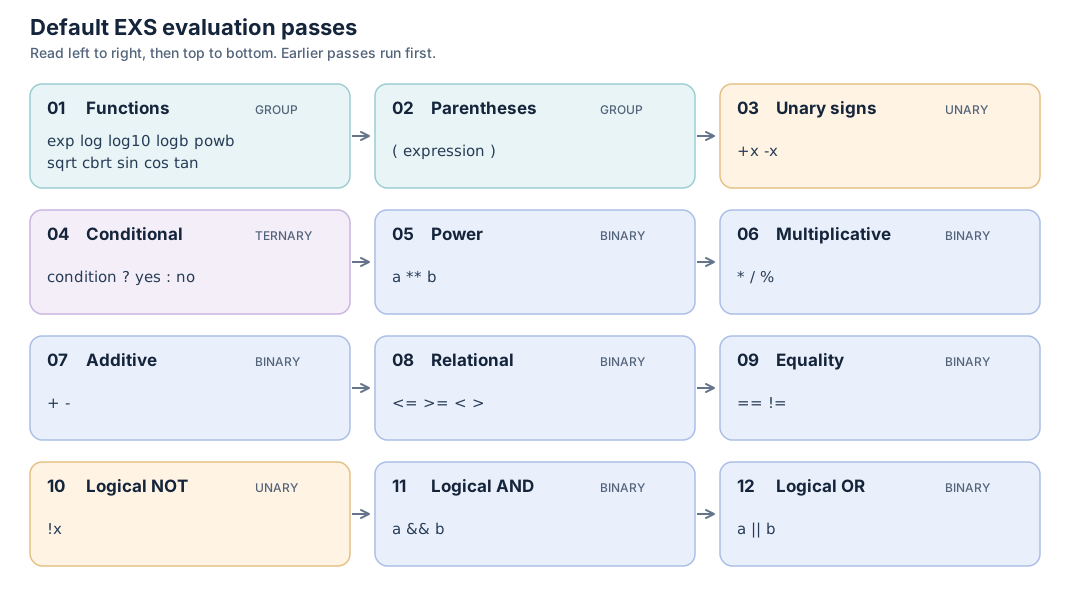
The defaults are defined by Solver::init_steps() in
include/snt/exs/solver.h. The same operator can appear in different passes:
+ and - run once as unary signs and later as binary addition and
subtraction.
For example, the ModifiedSolver example uses
N, A, and O as logical symbols and supplies its own step order:
#include <memory>
#include <snt/exs/solver.h>

snt::exs::OperatorList operators;
operators.append(snt::exs::NOT_OPERATOR,
                 std::make_shared<snt::exs::OperatorNot>("N"));
operators.append(snt::exs::AND_OPERATOR,
                 std::make_shared<snt::exs::OperatorAnd>("A"));
operators.append(snt::exs::OR_OPERATOR,
                 std::make_shared<snt::exs::OperatorOr>("O"));

snt::exs::StepList steps;
steps.append(snt::exs::BINARY_OPERATION, {snt::exs::OR_OPERATOR});
steps.append(snt::exs::BINARY_OPERATION, {snt::exs::AND_OPERATOR});
steps.append(snt::exs::UNARY_OPERATION, {snt::exs::NOT_OPERATOR});

snt::exs::Solver<snt::exs::Atom> solver(operators, steps);
auto result = solver.eval("N false A false O true");
Here O is evaluated before A, and N after both. Operators can be
used only if they are registered and included in an appropriate step.
Passing only an OperatorList to the solver keeps the default steps;
passing only a StepList keeps the default operators. Passing both replaces
both defaults, so register and schedule every operator needed by the
expression. Use UNARY_OPERATION, BINARY_OPERATION,
TERNARY_OPERATION, or GROUP_OPERATION according to the operator’s
implementation.
See Custom atoms and operations for adding a new operator type rather than changing the symbols of existing ones.